Interview With Thought Leader Kathy Herrmann Part II

Saturday, July 16, 2011 by Sidney Angelos

Kathy Herrmann

We had the chance to sit down with Kathy Herrmann to ask her the hard hitting questions about social media and CRM. In this second part of the interview series Kathy discusses companies who are taking full advantage of social CRM.

Kathy, are there any companies you can think of who are doing a great job with social CRM currently? If so, what companies?
Vendor: Salesforce.com is building a strong customer service platform that includes support for social.  They’re being smart about it too because they’re creating a strong handshake between Customer Service and Sales.

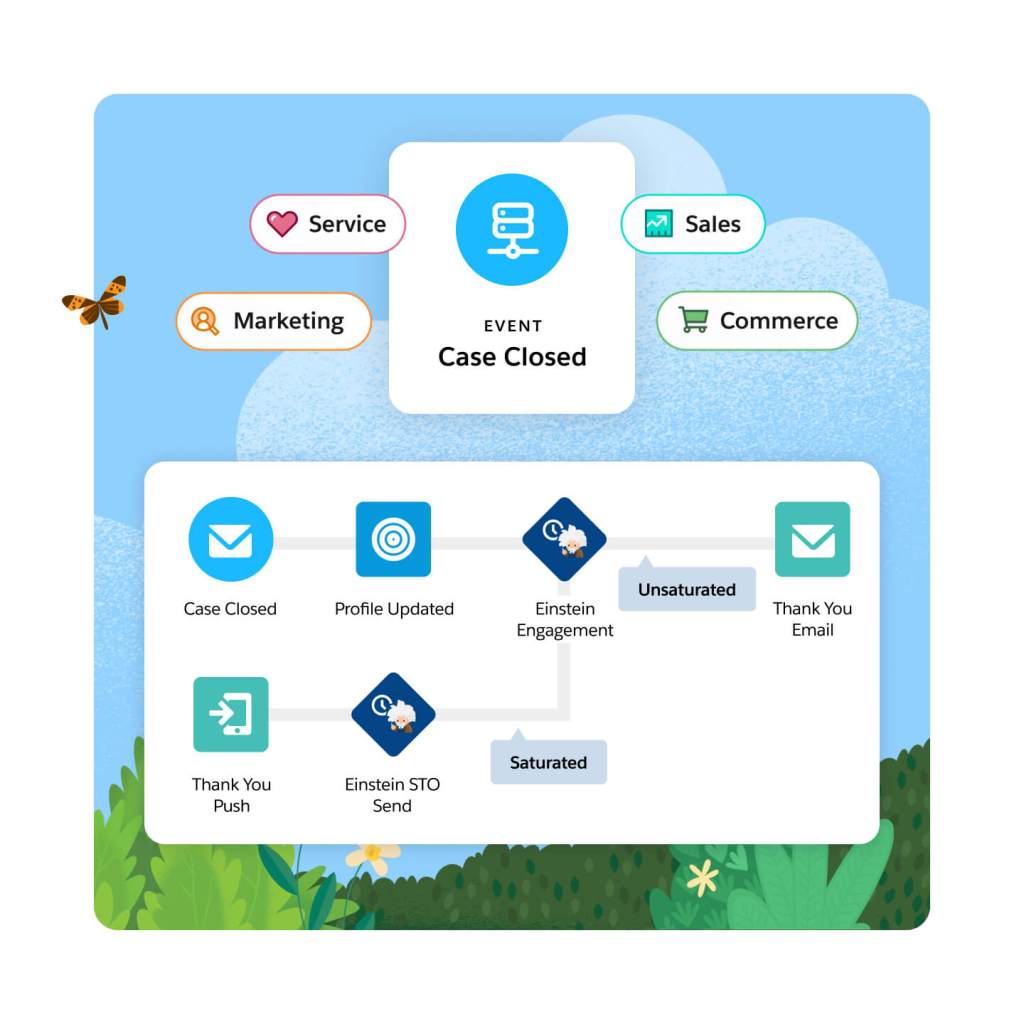
Let me give you an example.  A customer can tweet or post an issue in Facebook.  A company can then use their Salesforce Service Cloud application can capture the conversation or issue and make it into a case.  A service rep can then be activated to assist a customer.  Using Chatter, the rep can call out to other employees across the organization for information to better assist the customer.  The combination leads to faster issue resolution.

Further, the intelligence gained from that specific customer (or related feedback within the social channel) can then be shared with Sales who can turn it into a marketing or sales opportunity within their Salesforce Sales Cloud application.  And Service and Sales Cloud all seamlessly integrate.

Company: Dell. Dell took Dell Hell to heart and social became one of the channels they used to improved service.  They’ve built a listening center, headed by a former badvocate who became an advocate.  They view SCRM as part of their corporate strategy and allow sound business fundamentals (aka, making a business case) to their initiatives.  They’re measuring the business impact on social and can see how it is contributing to multi-million dollars in sales.  It’s a great win-win for both Dell customers and the company.

Company: Best Buy. Best Buy wanted to alleviate buyer paralysis when it came to making tech decisions.  They use social media across Twitter, YouTube and other channels to help educated buyers and accelerate buying decisions.  It’s working for them in terms of creating more satisfied customers and generating multi-million dollar revenues over a multi-year period.

Quite a few great examples, thank you!  What books or blogs do you recommend for learning more about social CRM?

My site has a wealth of information about SCRM and related topics, including blog articles, white papers, and videos.

Blogs:

Esteban Kolsky (@ekolsky) – CRM Intelligence and Strategy
Mitch Lieberman (@mjayliebs) – A Title Would Limit My Thoughts
Brian Vellmure’s CRM Strategies Blog and @crmstrategies
Paul Greenberg – PGreenBlog and @pgreenbe

What obstacles have you faced with clients or with upper management in proving the return on investing in social media for CRM?

There’s a disconnect between many social pundits and the executive suite.  Among the pundits, there’s a common opinion that social is a no-brainer and so companies should just jump in.  And there marks the divide.

Executives may have a gut feeling that social will be good for their business but they want to know how it will impact their bottom line.  What kind of business results will they gain from doing social?  And by business results, I mean revenues and profitability.

If a company is going to undertake social CRM initiatives at a strategic enterprise level for marketing, PR, customer service, or even internal collaboration, then social isn’t free.  It’s going to demand resources of people and technology.  So executives will expect to see a business case before they approve strategic investment in social CRM.

Folks who understand this – and make the necessary business case – will gain faster approval because they’ll be able to demonstrate their social objectives, strategies, and expected revenues or cost savings from investing in social CRM.

Tell us, how exactly do you currently measure the effectiveness of your social CRM?

Social CRM measurement means adding new metrics to the traditional.  Continue to collect metrics related to marketing, call centers, etc.

The cornerstone of the new metrics will be social monitoring metrics from vendors like Radian6.  Social analytics solutions allow companies to collect actionable intelligence about the behavior of customers and other interested parties across the web. These solutions measure, analyze, and report on social efforts.

I use the aggregation of traditional metrics, social analytics, and business results to determine the ROI of social programs – and ROI is the real test of effectiveness.

What traditional CRM techniques have you modernized through the use of social media?

Employing processes and technology to monitor social conversations and act on them is huge.  For example, being able to pull the conversations from a customer community site into a service case to provide direct customer service is huge – and it can happen in almost real time. Companies who take this approach find their customer satisfaction scores climb.

What advice can you give to a new business looking to use social media for customer relationship management?

Social media is a force to be reckoned with.  Customers are active in social channels whether you are or not.  Over time, if not already, companies that avoid social media engagement will find themselves penalized by their customers and the market place.  Said another way, social channels is where customer service is happening so your company better be out there.

Thanks again Kathy for letting us pick your brain and ask you the tough questions. Don’t forget to follow Kathy on Twitter, @KathyHerrmann for more about CRM and social media.


Interview With Thought Leader Kathy Herrmann Part I

Friday, July 15, 2011 by Sidney Angelos

Kathy Herrmann

Thanks so much Kathy for taking a few moments to let us interview you. Tell us, what is your background in CRM or social CRM?

I am a thought leader on social business and organizational change management. I specialize in holistically fusing people, process, and technology requirements to ignite positive change.

My transformational focus centers on helping clients understand how to leverage social business to improve customer-facing activities like marketing, sales, and customer service. Additionally, I also help clients foster greater collaboration across employees, customers, and partners. And I design ROI methodologies and tools for social business valuation determination.

For more information you can follow me on twitter at www.twitter.com/kathyherrmann or visit my site:  www.kathyherrmann.com.

Sounds like you have quite a bit of expertise in this field! How do you think social CRM has evolved in recent years?

Traditional CRM is based on 1-to-1 transactions because a company and an individual customer.  In contrast, SCRM refers to 1-to-many or many-to-many.  This has created challenges for companies to collect actionable intelligence from social channels.  And it’s not just intelligence from channels that a company may be active in.  Information from channels where they may not be active can be as or more important.

Social CRM technology is being driven by the demand for actionable intelligence from social channels.  Technology tends to break out into the categories of social engagement, community management, social monitoring, and the connectors to these solutions.

There is no one vendor, though, who does all aspects of SCRM well — although there are vendors that are doing categories well.  However, companies wanting a fully integrated and holistic solution still need to build best of breed solutions.

Companies really need to understand their social objectives and strategy to understand what they want to accomplish with social.  Once they do, then they can define the right SCRM technology solution set for them to manage their people and processes.

Agreed – knowing what you want to accomplish with social is the first and arguably most important step. How do you think the future of social CRM will change and morph over time?

Change management

Becoming a social business – not just a company with a Facebook page – is a change management opportunity and challenge for a company.  It requires attention to people, processes, and technology.

The more important question is – what can a company do to provide a better customer experience?  And what changes to people, processes, and technology are needed to support the strategy and tactics for such a customer-centric business model?

Doing social from a holistic corporate perspective needs to be driven at the executive level because it’s a strategic play.  Without executive buy-in and KPIs that support the strategy, it will likely fail within a company (or succeed despite itself).  Once the corporate strategy is defined, then the right processes can be generated and the right technology solution sets can be determined to support the people and processes.

Technology

No one SCRM vendor has a complete soup to nuts solution – and that’s probably a good thing because specialization is valuable.

Companies should expect to build best of breed SCRM solutions to meet their strategic needs.  Integration will become important to ensuring these individual solutions play well together.   Expect to see the major SCRM vendors or third-party providers build more connectors between solutions to ease integration and data collection across solutions.

Additionally, expect to see the major CRM players continue to make acquisitions to bolster their SCRM feature functionality.  Salesforce is a prime example of this with their acquisitions over the last few years of GroupSwim and Radian6.

We want to thank Kathy for taking the time to let us ask her the hard questions! Be sure to check out Part II of this interview tomorrow, and let us know what you think in the comments below!


Relationship Marketing In the Healthcare Sphere

Friday, July 15, 2011 by Sidney Angelos

The following is a guest post from Dhaval Patel.

The field of healthcare marketing is inundated with marketers who act in the interest of their respective employers.  Big pharmaceutical companies like Merck, Pfizer, and Sanofi-Aventis employ marketers to market their flagship prescription drugs.   Often times, these marketers work in concert with each other; however, more often that not these marketers are battling for a piece of valuable market share.  Relationship marketing along with business-to-business marketing can reduce marketing silos, and create an efficient workflow.

With the advent of online marketing and the rise of social media new avenues are available to marketers.  Online marketing has dramatically increased the breadth and scope of the marketing community. Where once marketers had to travel door to door to reach their respective clients, we now see marketers utilizing email along with other digital tools.

Savvy marketers have utilized these tools to reach out to a larger audience.  The influx of digital marketers has created a niche community focused on messaging and product positioning.  Customer relationship marketing, or CRM, has become an invaluable tool for healthcare marketing.  By digitizing information and fostering online communities that have global reach, these savvy marketers have not only increased their market share but in some cases have increased ROI.

The evolution of marketing has occurred rapidly.  Ten years ago healthcare marketers would go to door to door to pitch their products.  Within the past five years email and email marketing campaigns have been the standard.  The next five years, in all likelihood, will be dominated by Twitter, Facebook, and SaaS (software as a service).

Here are some healthcare trends to keep an eye on:

Drug Patent Expiry

The expiration of trademark drugs within the healthcare industry will have a profound impact on healthcare marketers.  There will be a dramatic spike in generic drug manufacturing globally.  Social media, along with marketing software, will play a big roll in how marketers distinguish themselves from competitors.

The Rise of Social Media

Social media guidelines, which have yet to be provided by the FDA, will have a profound impact on how marketers operate on Twitter and Facebook.  The savvy marketer will keep an eye on these trends and position their product accordingly.

SaaS (Software as a Service) integration

Marketers will also utilize software that is easy to use and provides a rich database of customer information.  Inbound marketing efforts, PR campaigns, and social media development will be readily accessible to savvy marketers utilizing SaaS platforms.

What are some relationship marketing methods you use to engage your customers?


CRM Wars – Using Jedi Mind Tricks to Defeat Customer Service Reps

Thursday, July 14, 2011 by Sidney Angelos

Here at AllThingsCRM.com we’re all about informing our readers, but we also like to have a little fun too. Below you’ll find a great Slideshow about how to use awesome Jedi mind tricks to defeat customer service reps!


Examples of Social CRM Done RIGHT!

Monday, July 11, 2011 by Sidney Angelos

During the past few years we have seen the evolution of CRM into Social CRM. Essentially, this has meant a significant increase in the role of the customer in a company’s marketing as well as sales and service departments. The creating of a much more bidirectional model has seen many benefits, including cost savings and an increase to the bottom line.

There have been a number of success stories that any business considering the step to Social CRM should be aware of as they can act as both an example and a template of what Social CRM can do for a business and its customers.

Linksys. One of the key ways in which Social CRM can benefit a business and its customers is through the way it creates a whole new dimension to support and customer service. One of the companies to lead the way in this is Linksys who have combined online support platforms already in place with an innovative decision to remove its email support. They have replaced it with online chat on which customers interact. The result has been a reduction in the number of calls received and significantly, an increase to satisfaction with customer support.

Enterasays Networks. Taking advantage of Salesforce.com’s Chatter to create a supportive platform for customer service concerns, Enterasays Network has used Social CRM to significantly increase sales. They have done this by using their records of customer interactions to evaluate the current situation with any ongoing customer dialogues and alerting colleagues when opportunities arise. This cross-department cooperation and interaction is the bedrock of their Social CRM success.

FedEx. One of the biggest names in the Social CRM evolution, FedEx can nevertheless act as an example to both large and small businesses in the way in which they have successfully adopted Social CRM. FedEx monitor social networks such as Twitter to keep a clear eye on how/if they are being discussed. If they see anything that needs addressing (for example, a late/non arrival of a parcel) they engage with the customer directly and suggest ways in which the situation can be resolved. The key point here is that when something goes wrong, businesses that have engaged in Social CRM understand that customers will not necessarily contact the company involved, but will rather discuss the problem on social media platforms. These discussions can quickly have a negative impact on the company’s brand reputation. Using social media to track such discussions is key; but what is important is not to try to defend actions, but to become part of the conversation and look for a solution. The ability to create a real-time dialogue with their customers means that companies such as FedEx can maintain their reputation and achieve a much higher level of customer service.

Chordiant. One of the very best examples of what is possible when a company fully embraces everything Social CRM has to offer. They have created an online community that takes in product managers along with developers and of course users to create a dynamic environment in which customers can have real impact through blogs and forums. The end result has been a much more defined idea of what customers want which has directly influenced the products produced. Over a dozen products have been created and released based on this process, which is a real indication of what can be achieved through the interaction that Social CRM encourages.

Best Buy. Taking the idea of staff evolvement to a level that probably could not have existed before Social CRM, Best Buy have created a community that has responded to in excess of 12,000 customer queries by having over 2,000 members of staff as part of its community. The results have been superb, with customers receiving quick and efficient responses while feeling part of the process.

Harley Davidson. The iconic motorcycle company have created a large social community where members post photos of their bikes and talk all things Harley. The company’s grasp of the possibilities of Social CRM has meant that they ensure that there are always Harley mechanics available to answer queries, as well as staff to offer advice on new models and ownership queries. Combing the fun of an owners’ club, with practical sales, marketing and service the site is a template for what Social CRM can offer for both companies and their customers.

Know of any examples we can add to the list? Let us know in the comments below!


Customer Services are Integral to Business Growth, A New Study Shows

Friday, July 1, 2011 by Sidney Angelos

A recent survey performed by the Federation of Small Businesses indicates that many of the 1,700 polled believe providing better customer service is an integral key to growing their businesses. Whether exposing employees to in-house training in areas such as sales, marketing or public relations, the overriding sentiment was that increasing the company’s care and concern for the paying client seemed paramount to its success.

One of the more recent developments in the ways businesses operate is a focus on something known as customer relationship management, or CRM. In effect, CRM is akin to taking customer service to new levels by providing employees with tools and data they need to exceed the customer’s expectations.

The implementation of CRM into the company’s operations has multi-tiered effects on information organization, sales forecasting and indeed tends to lead to increased sales, and as importantly to the long term growth of the business and increased perceptions of customer service. The following list will focus on and expand how a business’s use of CRM affects the customer directly.

4 Direct Effects of CRM on the Customer Experience

  1. More Satisfied Customer Base: The early part of the 20th century saw a number of brand names become synonymous with the products sold by the company. Think Kleenex or Band-aid. Of course in those days, there was very little, if any competition and this allowed the company to develop a large base of customers who became habitual buyers. As long as the business treated the paying clients well, their growth and profits seemed guaranteed.Today’s markets certainly have much more competition, however the concept of developing a satisfied customer base holds true. Providing the ones main source of revenues with satisfactory customer service is an excellent way to firmly establish the company in the marketplace and ensure its growth in the long term.
  2. Customer Loyalty Improvement: Some savvy marketer once came up with a concept for the tobacco industry that fully encapsulates the concept of customer loyalty. The paradigm that was filtered into their customer base was that a cigarette smoker would rather fight than to give up their particular brand. This very same concept holds true for any brand looking to increase the loyalty of their paying consumers. By providing excellent customer services, the company increases the chance that someone who buys their products would actually pay a little more or go a little farther in order to have the quality and service they have come to expect. Lower priced imitations of their favorite goods would only cause them to reaffirm their brand loyalty that much more.
  3. Customer Retention: It is certainly true that it costs more to get a customer than to keep one. Retaining the businesses best customers is one of the key focuses of CRM and when considering the implementation of such a plan, bearing in mind the cost factors of getting new clients versus keeping existing ones can be a strong rationale for investing in the technology required.While some customers look for the deal with every purchase they make, others look to be cared for. They become loyal to a brand and its company when they know they can expect quality products and be serviced even beyond their expectations. The business looking for long term customer retention must place excellent service to the paying clients above even their own goals of profits. Customers see this in the company and tend to reward the business by staying with them for very longer periods of time.
  4. Direct Customer Referrals/WOM: Most businesses understand the power of word of mouth advertising. When the above three factors come together to produce an extremely satisfied customer, an inevitable result is that customer’s desire to spread word of the treatment he or she has had at the hand of the company.In days past, the rule of thumb was that each person knew or had some direct connections with upwards to about 150 others. Known as the Dunbar Number, this sphere of influence was one way that a company would hope to get knowledge its brand products passed around. Today, however, the concept of spreading the word to only 150 others seems quaint. With the advent of social media and the communities which have spawned as a result, even the most average of individuals can have hundreds or thousands of others they communicate with on a regular basis. Today, direct customer referral is big business, and the best way to understand the power of this phenomenon is to harness social CRM for the benefit of the company and its customers.

The speed and power of the Internet can make amazing things happen very fast. It is important, however that when considering how to grow ones business, to have a realistic expectation on what will happen and when. Yes information travels faster today thanks to email and the World Wide Web. But when considering the implementation of a plan which may include CRM, it is important to remember that investing in such a game plan is a long term proposition.

Information gathering, storage and processing takes time. Training employees on use of the tools and various other aspects of providing quality customer services will also take some time. Most importantly, the business needs to put the time and effort into helping their customers feel important and appreciated in order to begin to see returns on any CRM investment.


How To Know When Your CRM Is Broken

Thursday, June 30, 2011 by Sidney Angelos

During the 1990s when customer relationship management or CRM was just beginning to be implemented in business processes, one of the biggest challenges was simply getting the corporate structure to use the tools and channels of communication effectively. Today, the evolution of the Internet, and its various channels, has increased the contents of the marketer’s tool box with more innovative ways to manage the business’s relationships with its customers.

The challenge with all the latest bells and whistles is to know when something is amiss. When does the company understand that their CRM efforts are not working, or being as effective as they might be?

Too many marketing executives wait to see the reports. Even on a weekly basis, the time it takes for the feedback to enter into the conversation may be longer than is healthy for regular, successful business operations.

Fortunately for today’s business marketing professional, in addition to a wide array of low cost, effective CRM applications, the employment of social media with the specific application towards customer relationships management can provide near real time feedback on the current state of CRM affairs.

In the past, sales was a direct indicator of how a company was doing. Though still true today, taking the time to wait for sales data, making a determination of response, and then implementing that response can take too much time.

With the use of social CRM tools and communities, the business can be more active in the direct interaction with its customers. When something goes wrong, the conversations usually start with the communities of users. Active company representatives continually monitoring the various social channels can be clued into the negative conversations within minutes, not the days, weeks or months of the past.

When it comes to monitoring the working efficacy of the CRM application in place, one of the best mechanisms is to simply ask ones customers how things are going. How has their experience with the company affected them?

Again, social CRM provides a number of tools that are both easy to use and relatively inexpensive as well. The following list briefly describes some of these tools, and how the savvy marketing department can use them to promote the company brand, while still providing top quality service to the customers:

Tools To Use In Effective CRM

  • Cloud CRM Applications: Cloud computing, or the hosting of applications on servers (or parts of servers) not wholly owned by ones company, can provide the business with effective, scalable solutions when it comes to providing quality relationships management. An effective indicator of shoddy CRM can be the over-burdening of in-house servers loaded up with various software applications required to provide acceptable customer experiences.By enlisting the help of instantly scalable software and hardware solutions, the business can do away with the excuse of technology as an inhibitor to the customer being treated fast and in good fashion.
  • Monitoring the Conversation: Knowing what is being said about ones customer is as important as being able to take quick action to remedy less than positive scenarios. In the past, this sort of continual around the clock monitoring simply was not possible.Today, however, with active use of social communities, the company is able to set up automated services which check any mention of a brand. Now, with dedicated individuals whose primary focus is spotting and reacting to the mention of its brand names, the conversation can always be heard.When others are speaking ill, social CRM provides a fast, easy, and low cost way to deal with the challenges. When bad things are spread about the brand, it becomes paramount for the company to address the problem head on, in good timely order, and with intelligent, compassionate solutions. Social CRM will provide the communication channels for this to happen.
  • Continual Content Creation: If the company is receiving a number of similar questions or complaints about some aspect of its operations, a clue might be picked up on that CRM is broken. Maintaining a database of the various questions asked easily leads to an FAQ page, or knowledge base of solutions where current and potential customers can find the answers they seek fast.
  • Setting Automated Notifications: As stated, people will talk about ones company and brands. In addition to the real-time conversations taking place within the confines of social communities like Facebook or Twitter, thousands of bloggers and other website owners publish new articles and blog posts every day. Many of them will talk about the brand that is important to the company in question.Search engines like Google have free, easy to use mechanisms in place to monitor a specific keyword or phrase and then email those references to someone in the company who needs to know what’s being said. Whether having an email delivered immediately, or on a daily or weekly basis, it is important to hear what is being said outside of the traditional social community venues.The quicker one is receiving this information, the faster a determination can be made on how to deal with it. For a large percentage of the conversations, simply logging into the speaker’s website and leaving an official, informed comment can make the difference between representing the brand well, and inviting further challenging criticism.

In a nutshell, if the paying customers are complaining about products, or the way they are being treated, one should know there are challenges with the CRM process. When the conversation is a bit harder to locate, extra efforts need to be employed in order to better deal with amicable solutions.

Taking the time to monitor the chatter, separate the noise from the legitimate concerns will be a win for the company in a number of ways. Existing customers like to know they are valued. They’ll tell everyone within their spheres of influence when the business goes out of their way to make the customer feel valued and worthy.

But customers will also tell their friends and associates when they’ve been done wrong. With today’s communications capabilities this bad news can spread much faster than wildfire.

Have you noticed that your CRM efforts are not working properly? What metrics did you use to come to this conclusion? Share with us in the comments below:


Creating Loyal Customers through Cloud CRM

Tuesday, June 28, 2011 by Sidney Angelos


Cloud CRM, or customer relationship management, applications are opening doors for increased customer satisfaction while simultaneously lowering a company’s cost of providing for those experiences. By creating environments where a business can quickly and easily implement software solutions, on infinitely scalable hardware platforms, the cloud computing providers have made for effective channels of two-way communications between the business and its customers.

Hosting a CRM application on a cloud platform makes sense for the business because it:

  • Greatly reduces costs. Original applications required dedicated servers hosted directly in data centers (for the best performance.) In addition to the tens of thousands of dollars required to pay for software licenses, the cost of purchasing and maintaining server hardware could become astronomical to the business.
  • Provides near-instant scalability. Things happen fast in today’s online world. Being able to fulfill demand by quickly creating additional server instances can spell the difference between success and failure.
  • Eliminate Need of Dedicated Professionals. Many of the current cloud CRM solutions are so automated and easy to use, the business using such solutions no longer need an IT professional on their own staff. With the wages now commanded by such trained professionals, this savings alone often times more than covers the cost of implementation and maintenance of the Cloud CRM solution.

With this establishment of what Cloud CRM is and why it makes sense, now let’s discuss a focus on how to use this new technology platform to create loyal customers.

Many of today’s tech savvy customers are quickly becoming used to having information about their purchasing habits collected by equally savvy companies. In order to get maximum use of the data collected, businesses are regularly implementing Cloud CRM solutions. With a little fore thought and systems design, even the smallest businesses might realize a number of benefits in providing superior customer service through the cloud.

What are some of those benefits? The following list will briefly describe the more effective ways the business can ensure a happy customer experience; one that has higher chances of being repeated.

5 Benefits To the Business Of Implementing Cloud CRM Solutions

Capture & Management of Customer Information:

If information is power, then the effective collection and management of customer data allows the company the power it needs in order to provide quick, easy and cost effective customer service. Cloud CRM solutions which make the harvesting of customer info its top priority should be at the top of one’s list when seeking a CRM solution.

Brand Recognition:

Whether employing social CRM modules in ones relationship management or simply taking advantages of cloud scalability, having low cost, immediate delivery of the company’s marketing message increases brand awareness, and does so at previously unrealized cost and effort.

Sales Cycle Management:

Even the simplest retail sales have specific sales cycles. Cloud CRM solutions provide the company with both customer data as well as meta data associated with how the customer behaves. Having immediate access to when a customer buys, what they are spending their money on, whether or not returns are happening, and if so, to what level, and more, can provide management with a more complete picture of the entire sales cycle. The use of that information in constructive and relevant manners could make the difference between increasing sales to existing customers and seeing quotas go unmet.

Ease of Delivery of Priority Customer Service:

Most customers want to feel they are the only thing important to the company. It can be a challenge to know which customer should be treated with priority and which ones should simply be respected, but not necessarily promoted to the level of those getting the very best treatment.
The harsh reality is that there are certain customers who pay much more to a business with the expectation of being taken care of. This does not, of course, excuse a company for ignoring or otherwise offending all of their customers, but with the information made available to the sales associates via a Could CRM solution, those who spend the most will be immediately identified and treated as the company wishes them to be.

Highly Personalized Service:

Even with the last benefit having been stated, one of the most alluring aspects of a business using Cloud CRM is the ability to personalize many of its interactions with its customers at little to no extra cost. Today’s computer power and Internet delivery speeds makes it very easy for a cloud based solution to present an employee with a massive amount of data when dealing with the current customer. Even in an online approach where the company provides the customer with direct access to their individual account information, the use of Cloud CRM solutions can provide a richer more robust user experience.

At the end of the business day, it is usually the customer’s purchases which make the company’s world go round. For a minimal investment in Cloud CRM technologies, the savvy business can provide for superior customer relationship while still holding down its costs of doing so. Happy customers tend to spend more money. They also tend to tell their friends, family and associates.


About Us

AllThingsCRM.com is intended to be a comprehensive resource for business professionals who want to learn more about the benefits that customer relationship management (CRM) can provide to a company. It’s our mission to provide the most reliable, up-to-date information about all aspects of the customer relationship management process, including the options available for hosting platforms, automation, software, custom application development, and infrastructures.

Contact Us

Have feedback, a story idea or news tip? We’d love to hear from you. Please send feedback to webmaster [at] allthingscrm [dot] com.